
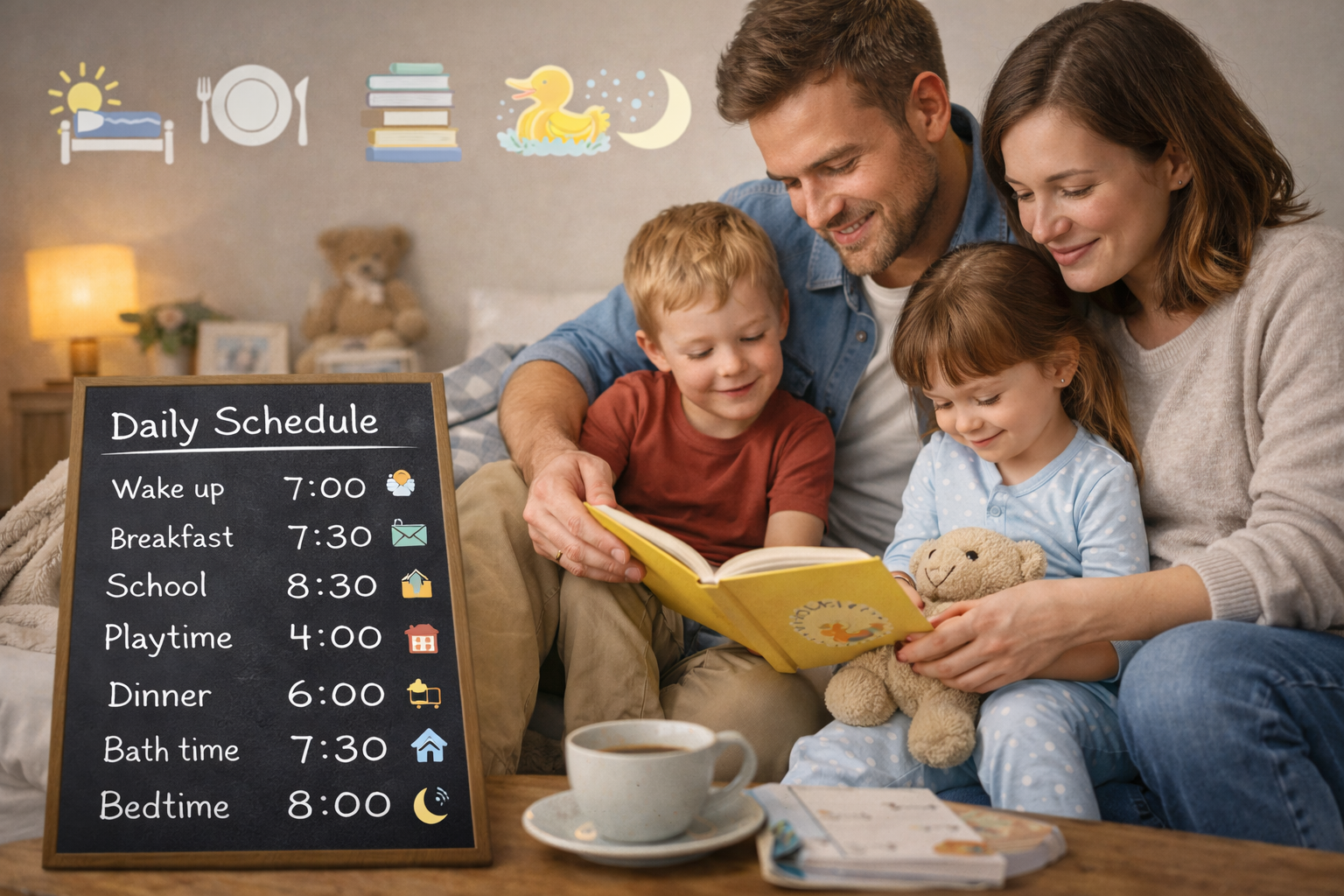
Routine plays a fundamental role in raising children. While flexibility is necessary in family life, a consistent daily structure helps children feel safe, confident, and emotionally balanced. Routines provide predictability, which is essential for children as they learn to understand the world around them.
A well-established routine does not mean rigidity. Instead, it creates a reliable framework that supports emotional development, behavior, and family harmony.
Why Routine Matters for Children
Children thrive when they know what to expect. Predictable daily activities such as meals, bedtime, and playtime help them feel secure. This sense of security allows children to focus on learning, exploring, and building relationships.
Routine also reduces anxiety. When children understand the flow of their day, they are less likely to feel overwhelmed or confused by transitions and changes.
Emotional Security Through Predictability
Emotional security is closely linked to consistency. Routines help children understand that their needs will be met regularly and reliably. This builds trust between parents and children.
Knowing what comes next helps children regulate emotions more effectively. It reduces frustration and supports emotional self-control, especially in early childhood.
Helping Children Develop Healthy Habits
Daily routines are powerful tools for teaching healthy habits. Regular schedules for sleeping, eating, and personal care promote physical and emotional well-being.
When healthy habits are repeated daily, they become part of a child’s natural behavior. This consistency supports long-term well-being and encourages responsibility as children grow.
Supporting Positive Behavior
Routines create clear expectations. When children know what is expected at certain times of the day, they are more likely to cooperate and less likely to resist.
Clear routines reduce power struggles. Instead of constant negotiation, children learn to follow familiar patterns, which contributes to a calmer home environment.
Improving Transitions Throughout the Day
Transitions can be challenging for children, especially when moving from one activity to another. A consistent routine helps ease these moments.
For example, a predictable bedtime routine signals that the day is ending, helping children prepare emotionally and physically for rest. Over time, transitions become smoother and less stressful.
Strengthening Family Connection
Routines create opportunities for meaningful family interactions. Shared meals, reading time, or evening conversations strengthen bonds and build emotional connection.
These daily moments of connection reinforce a sense of belonging. Children feel valued when they know there is dedicated time for family interaction.
Reducing Stress for Parents
Routines benefit parents as much as children. A predictable structure reduces decision fatigue and daily stress. Parents spend less time reacting and more time guiding.
Having a routine also makes it easier to balance responsibilities such as work, household tasks, and family time. This balance supports emotional well-being for the entire family.
Teaching Responsibility and Independence
As children become familiar with routines, they begin to take ownership of certain tasks. Simple responsibilities like tidying up toys or preparing for bedtime encourage independence.
Routine teaches children time awareness and accountability. These skills become increasingly important as they grow and take on more responsibilities.
Adapting Routines as Children Grow
Routines should evolve with a child’s age and needs. What works for a toddler may not suit an older child. Emotional awareness helps parents adjust routines while maintaining consistency.
Flexibility within routine allows families to adapt without losing structure. This balance supports growth while preserving emotional security.
Creating a Routine That Works for Your Family
There is no universal routine that fits every family. The most effective routines reflect a family’s values, schedule, and lifestyle.
Starting with simple, manageable routines increases the chances of long-term success. Consistency matters more than complexity.
Building a Calm and Balanced Home Environment
A predictable routine contributes to a calm home atmosphere. Children feel more relaxed, and parents feel more in control of daily life.
This balance creates a positive cycle where emotional security supports good behavior, and good behavior reinforces family harmony.
Routine as a Foundation for Healthy Development
Routine is not about control, but about care. It provides children with the stability they need to grow emotionally, socially, and mentally.
By establishing thoughtful routines, parents create a supportive environment where children feel safe, confident, and ready to face new challenges. Routine becomes a quiet but powerful foundation for healthy family life.