
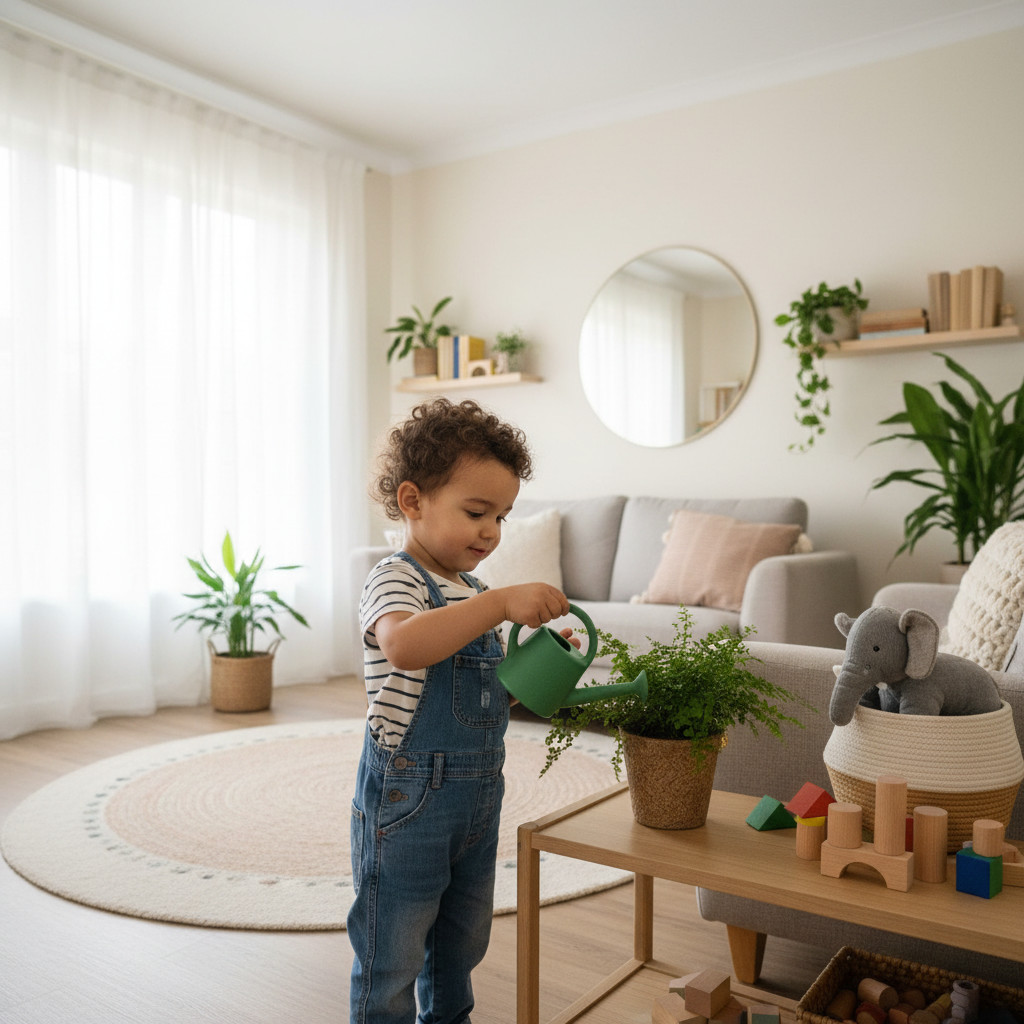
Responsibility is not something children suddenly develop as teenagers. It is a skill built gradually through daily habits, small tasks, and consistent guidance.
When children learn responsibility early, they develop independence, confidence, and stronger decision-making skills. They begin to understand that their actions have consequences — both positive and negative.
Teaching responsibility is not about strict control. It is about preparing children to manage their own lives with maturity and confidence.
Let’s explore how to nurture responsibility in a healthy and age-appropriate way.
Why Responsibility Matters in Childhood
Children who learn responsibility early tend to:
- Develop self-discipline
- Build stronger problem-solving skills
- Show better emotional regulation
- Gain confidence in their abilities
- Become more independent teenagers
Responsibility also strengthens accountability. When children understand that their actions matter, they are more thoughtful in their choices.
Most importantly, responsibility builds resilience — the ability to handle life’s challenges without constant supervision.
Start Small and Age-Appropriate
Responsibility should grow with the child.
Toddlers (2–3 Years)
At this stage, responsibility is simple and guided.
Examples:
- Putting toys back in a basket
- Throwing trash in the bin
- Helping carry light items
- Placing clothes in a hamper
The goal is not perfection. It is participation.
Preschoolers (3–5 Years)
Children can begin handling slightly more structured tasks:
- Setting the table
- Watering plants
- Feeding a pet (with supervision)
- Cleaning up after play
Repetition builds habit.
School-Age Children (6+ Years)
Older children can take on:
- Organizing school materials
- Completing homework independently
- Managing small allowances
- Helping prepare simple meals
- Taking responsibility for personal hygiene
As children grow, so should expectations.
Allow Natural Consequences
One of the most powerful teachers of responsibility is natural consequence.
If a child forgets their homework, they may experience a lower grade.
If they forget a jacket, they may feel cold.
Of course, safety always comes first. But when consequences are safe and reasonable, allow children to experience them.
Avoid rescuing immediately. Rescue removes the learning opportunity.
Instead, discuss afterward:
- “What happened?”
- “What could you do differently next time?”
Reflection builds maturity.
Avoid Over-Controlling
When parents constantly remind, correct, and manage every detail, children may struggle to develop responsibility.
Micromanagement can unintentionally send the message:
“You can’t handle this on your own.”
Gradually step back.
Offer guidance, but allow space for independent action.
Trust builds confidence.
Create Clear Expectations
Children thrive when expectations are clear and consistent.
Instead of vague instructions like:
- “Be responsible.”
Use clear statements such as:
- “Put your backpack away when you get home.”
- “Brush your teeth before bed.”
- “Finish homework before screen time.”
Consistency builds routine.
Routine builds responsibility.
Teach Time Management Early
Time awareness supports accountability.
You can help by:
- Using visual schedules
- Setting timers for tasks
- Teaching children to estimate how long tasks take
- Creating checklists
As children grow older, introduce planners or calendars.
Managing time independently is a major milestone in responsibility.
Encourage Problem-Solving
If your child faces a challenge, avoid immediately providing the solution.
Instead, ask:
- “What do you think you should do?”
- “What are your options?”
- “How can you fix this?”
Problem-solving builds ownership.
When children feel capable of solving issues, they take greater responsibility for outcomes.
Model Responsible Behavior
Children learn more from observation than instruction.
Demonstrate responsibility by:
- Admitting mistakes
- Following through on commitments
- Managing your time well
- Taking care of household tasks
You might say:
- “I forgot to send that email. I need to fix that.”
- “I promised I would finish this today, so I will.”
Modeling accountability teaches integrity.
Praise Effort and Initiative
Instead of only correcting mistakes, recognize responsible behavior when it happens.
Say things like:
- “I noticed you packed your bag without being reminded.”
- “You remembered to feed the dog. That shows responsibility.”
Specific praise reinforces positive habits.
Children repeat behaviors that receive attention.
Teach Financial Responsibility Gradually
Money management is an important part of responsibility.
For school-age children, consider:
- Small allowances
- Saving for desired items
- Learning about spending and saving
- Setting simple financial goals
These early lessons build financial awareness for adulthood.
Avoid Shame and Harsh Criticism
Responsibility grows best in a supportive environment.
Shaming statements like:
- “You’re so irresponsible.”
- “You never do anything right.”
can damage confidence and motivation.
Instead, focus on the behavior:
- “You forgot to clean up today. Let’s try again tomorrow.”
- “What can help you remember next time?”
Correct gently but firmly.
Be Patient with the Process
Responsibility is not mastered overnight.
Children will forget, resist, and make mistakes.
That is part of learning.
Stay consistent. Stay calm. Stay encouraging.
Growth happens through repetition.
Preparing Children for Independence
As children approach adolescence, responsibility becomes even more important.
Children who have practiced responsibility throughout childhood are better prepared to:
- Manage academic demands
- Handle peer pressure
- Make safe decisions
- Balance commitments
- Transition into adulthood
Responsibility supports long-term success.
Raising Capable and Accountable Children
Teaching responsibility is one of the greatest gifts you can give your child.
It builds:
- Confidence
- Discipline
- Resilience
- Accountability
- Independence
Start small. Stay consistent. Offer guidance without control.
Allow mistakes. Encourage reflection. Model integrity.
When children learn that they are capable and trusted, they rise to meet expectations.
Responsibility is not about perfection.
It is about growth — one small task, one decision, and one lesson at a time.