
Emotions are a big part of life — and yet, many of us were never taught how to talk about them. For children, learning to understand and express their emotions is essential for building self-awareness, empathy, and healthy relationships. And the best place for this learning to begin is at home.
When you create a safe space for emotional conversations, you help your child develop emotional intelligence — the ability to recognize, understand, and manage their feelings and the feelings of others.
In this guide, you’ll learn how to talk to your children about their emotions in ways that are natural, age-appropriate, and deeply supportive.
Why Talking About Emotions Matters
Children who grow up in emotionally open homes are more likely to:
- Express their needs clearly
- Show empathy toward others
- Cope with stress and frustration better
- Build healthy communication skills
- Have stronger mental health over time
When kids don’t learn to talk about their emotions, they may act them out instead — through tantrums, silence, aggression, or anxiety.
Helping your child put words to feelings gives them a powerful tool for life.
Start Early and Keep It Simple
Even babies experience emotions. While they can’t speak yet, they benefit from hearing you label and respond to their feelings.
Examples for toddlers and young children:
- “You’re smiling! You look happy.”
- “That loud noise scared you, huh? That’s okay.”
- “It’s hard when the toy doesn’t work. You’re frustrated.”
As they grow, continue using clear, everyday language:
- “I noticed you got really quiet. Are you feeling sad?”
- “It’s okay to feel angry. Let’s talk about what happened.”
- “I understand you’re disappointed. Want to tell me more?”
Children learn emotional vocabulary just like any other language — through repetition, modeling, and real-life examples.
Make Emotions a Normal Topic
One of the best ways to teach your child about feelings is to talk about them when things are calm, not just during meltdowns.
Some easy ways to do this:
- Talk about characters’ feelings in books or shows: “How do you think she felt when that happened?”
- Share your own emotions in healthy ways: “I felt nervous before my meeting today, but I took a deep breath and did my best.”
- Use moments from their day: “You seemed really proud after drawing that picture.”
This helps your child see that feelings are normal, not something to hide or be ashamed of.
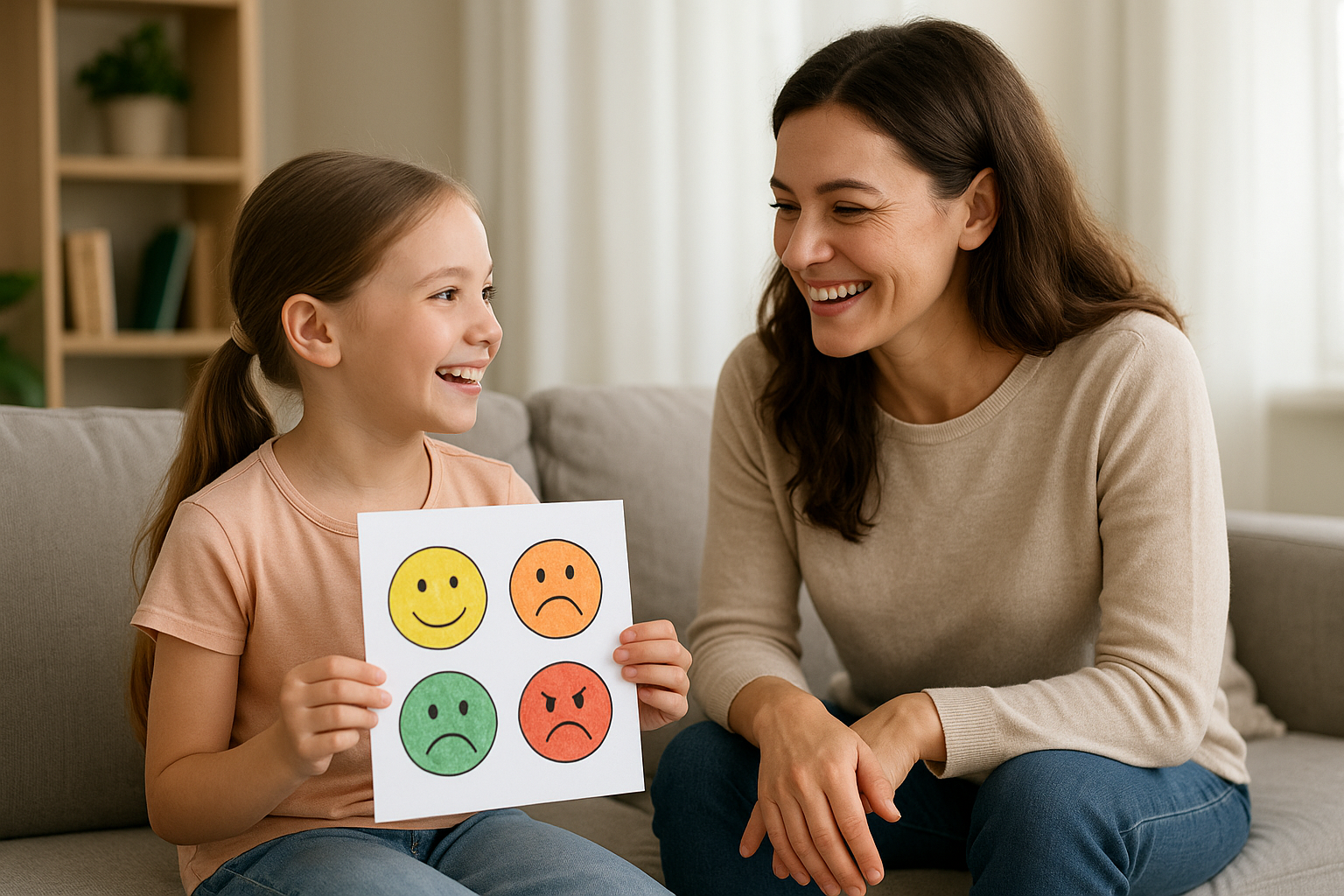
Use Emotion Charts or Feeling Faces
Visual tools can help children, especially younger ones, identify and name what they’re feeling.
Ideas:
- Use a printed emotion wheel or chart with faces
- Ask, “Can you point to how you feel today?”
- Encourage drawing or coloring how they feel if they can’t say it yet
These tools help take the pressure off verbal expression and make the process more interactive.
Listen Without Rushing to Fix
When your child opens up about their feelings, it’s tempting to jump in with advice or try to make the feeling go away. But children don’t always need solutions — they need to be heard.
Try saying:
- “That sounds really hard. I’m glad you told me.”
- “You’re feeling mad, and that’s okay. Want to talk more about it?”
- “I’m here with you. You don’t have to go through this alone.”
Validate first. Guide later.
Teach That All Emotions Are Allowed — But Not All Behaviors
It’s important your child learns that no emotion is “bad” — anger, sadness, jealousy, fear — they’re all part of being human. What matters is how we express them.
Explain it this way:
- “It’s okay to feel mad. It’s not okay to hit.”
- “You can feel frustrated, but you can’t break things.”
- “Feeling jealous is normal — it’s what you do with that feeling that matters.”
This distinction builds emotional awareness and personal responsibility at the same time.
Use Books and Stories to Talk About Feelings
Children naturally connect with stories. Books about emotions give language and perspective while creating moments for reflection.
Some popular themes to look for:
- Feeling angry and calming down
- Being left out or lonely
- Celebrating differences
- Overcoming fear or worry
After reading, ask questions like:
- “Have you ever felt that way?”
- “What do you think the character needed?”
- “What would you do in that situation?”
Books open the door to deeper conversations.
What to Do When They Don’t Want to Talk
Sometimes your child may shut down, say “I don’t know,” or walk away. That’s okay. Not every emotion will be easy to talk about immediately.
Here’s what you can try:
- Stay nearby and offer quiet presence
- Use play, drawing, or stories as indirect outlets
- Circle back later: “I’m here when you’re ready to talk.”
Avoid pressuring them — trust and openness take time.
Model Repair and Apologies
When you make a mistake — like raising your voice, losing patience, or shutting down — own it.
Say something like:
- “I was feeling overwhelmed, and I didn’t speak kindly. I’m sorry.”
- “I got frustrated earlier. That wasn’t your fault.”
- “Can we try again? I want to understand what you’re feeling.”
This shows that even grown-ups make emotional mistakes — and that repair is part of healthy communication.
Create a Safe Emotional Environment
Your child will feel more open to express themselves if they know:
- They won’t be judged
- Their feelings won’t be used against them
- You will listen without punishment or shame
You can build this by:
- Being consistent and patient
- Responding to outbursts with curiosity, not anger
- Avoiding phrases like “Stop crying” or “You’re fine”
The safer your child feels emotionally, the more they will share.
Final Thoughts: Emotions Are a Language — Help Them Learn to Speak It
Your child was not born knowing how to talk about what they feel. But with your help, they can grow into someone who:
- Understands their own emotions
- Expresses themselves clearly
- Shows empathy to others
- Handles life’s ups and downs with emotional strength
Talking about emotions doesn’t mean eliminating the hard moments — it means helping your child walk through them with confidence.
You’re not just raising a well-behaved child — you’re raising an emotionally healthy human.