
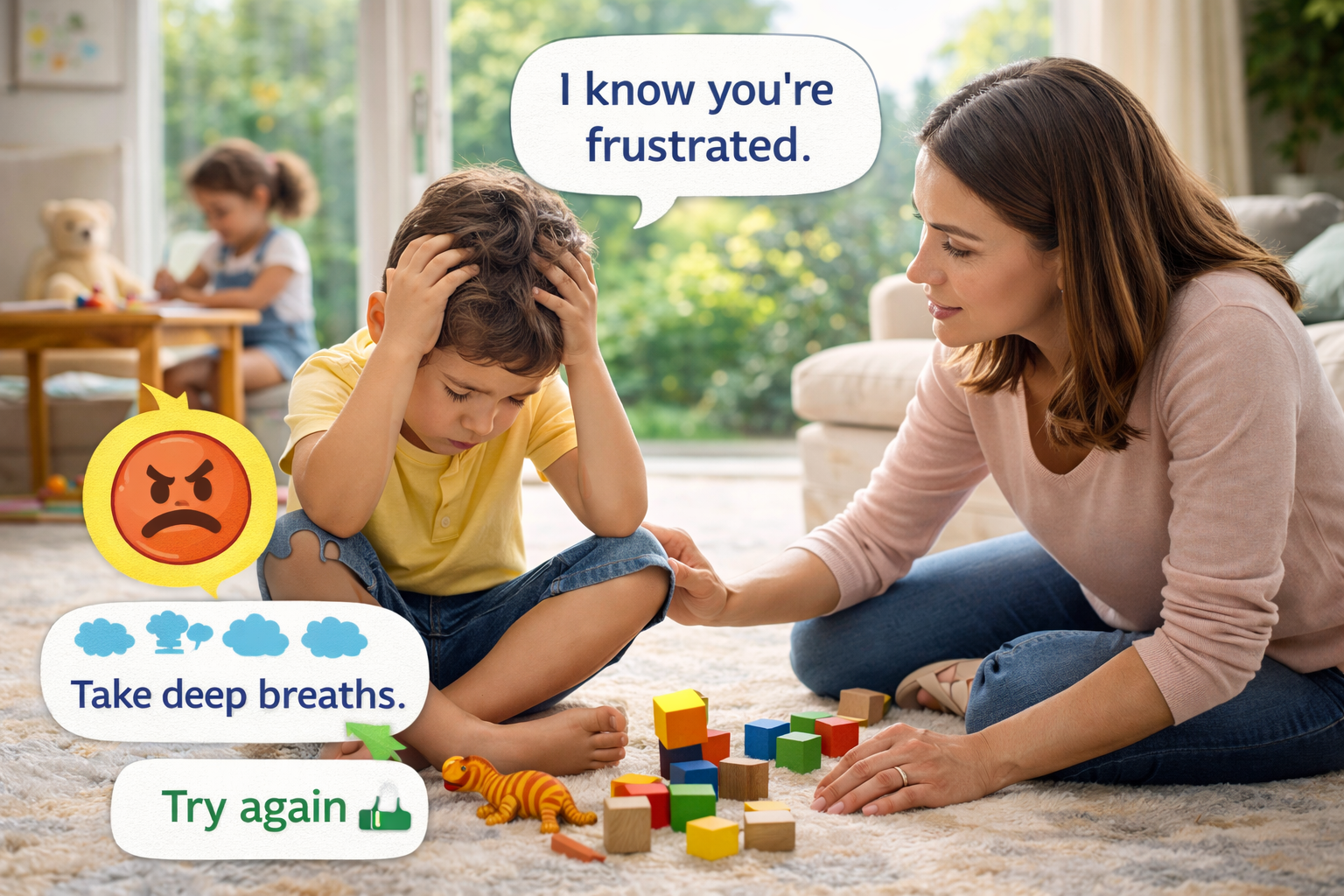
Frustration is a natural part of growing up. From struggling to tie shoelaces to losing a game or not getting what they want, children face small challenges every single day. While these moments may seem minor to adults, they can feel overwhelming to a child.
Learning how to manage frustration is one of the most important life skills a child can develop. When guided properly, frustration becomes an opportunity to build resilience, patience, and emotional strength.
The goal is not to eliminate frustration from your child’s life. The goal is to teach them how to navigate it confidently and calmly.
Why Frustration Feels So Big to Children
Children are still developing emotional regulation and impulse control. Their brains are learning how to process disappointment and delay gratification.
When a child experiences frustration, they may:
- Cry or scream
- Give up quickly
- Become angry
- Blame others
- Shut down emotionally
These reactions are not signs of failure. They are signs of development in progress.
Understanding this helps parents respond with guidance instead of irritation.
Teach That Frustration Is Normal
One of the first steps is normalizing frustration.
You can say things like:
- “It’s okay to feel frustrated.”
- “Learning new things can be hard.”
- “Everyone feels this way sometimes.”
When children understand that frustration is a universal experience, they feel less alone and less ashamed.
Avoid minimizing their feelings. Even if the problem seems small, the emotion is real to them.
Help Your Child Identify the Feeling
Young children often react before they understand what they are feeling.
Label the emotion calmly:
- “It looks like you’re frustrated because the puzzle piece won’t fit.”
- “You seem upset that the game didn’t go your way.”
Naming emotions gives children language. Language reduces emotional overload.
Over time, your child may begin saying, “I’m frustrated,” instead of reacting impulsively.
Pause Before Solving the Problem
It’s natural to want to fix things immediately. However, constantly solving problems for your child can weaken their coping skills.
Instead:
- Acknowledge the feeling.
- Pause.
- Ask a guiding question.
For example:
- “What do you think we could try next?”
- “Would you like help, or do you want to try again?”
This approach builds problem-solving confidence.
Teach Calming Techniques
Frustration activates the body’s stress response. Teaching calming tools helps children regain control.
Deep Breathing
Encourage slow breathing:
“Inhale for four seconds, hold, and exhale slowly.”
Practice during calm moments so it becomes natural during stress.
Take a Short Break
Sometimes stepping away for a few minutes helps reset emotions.
Use Positive Self-Talk
Teach phrases like:
- “I can try again.”
- “Mistakes help me learn.”
- “I don’t have to be perfect.”
These statements build resilience over time.
Encourage a Growth Mindset
Children who believe abilities can improve with effort handle frustration better.
Instead of praising results, praise effort:
- “You worked really hard on that.”
- “I noticed you didn’t give up.”
- “You kept trying even when it was difficult.”
This shifts the focus from success to persistence.
Avoid labeling children as “smart” or “talented.” Emphasize effort and improvement instead.
Allow Safe Failure
Protecting children from all disappointment may feel loving, but it prevents emotional growth.
Small failures are valuable teachers.
Losing a game, making a mistake on homework, or struggling with a new skill builds resilience when handled with support.
You can say:
- “It didn’t work this time. What did you learn?”
- “What could you try differently next time?”
Failure becomes feedback rather than defeat.
Model How You Handle Frustration
Children learn most by observing.
If you encounter a frustrating situation, verbalize your coping strategy:
- “I’m frustrated that this isn’t working, so I’m going to take a deep breath.”
- “This is challenging, but I’ll keep trying.”
Seeing adults regulate emotions teaches children that frustration is manageable.
Perfection is not required. Repairing moments matters more.
Avoid Shaming or Dismissing
Statements like:
- “Stop overreacting.”
- “It’s not a big deal.”
- “You’re being dramatic.”
can increase emotional intensity.
Instead, validate first:
- “I see this feels really hard for you.”
- “It’s disappointing when things don’t go as planned.”
Validation calms the nervous system and opens the door to problem-solving.
Break Tasks Into Smaller Steps
Sometimes frustration comes from feeling overwhelmed.
If your child struggles with a task:
- Divide it into smaller parts.
- Celebrate each small success.
- Offer guidance without taking over.
Small wins build confidence and reduce emotional overload.
Teach Patience Through Daily Life
Frustration often comes from wanting immediate results.
Daily opportunities to build patience include:
- Waiting turns during games
- Saving money for a desired toy
- Cooking together and waiting for food
- Practicing a new skill regularly
Patience grows with repetition and encouragement.
When Frustration Becomes Frequent
If your child shows constant extreme reactions, frequent meltdowns, or struggles significantly with regulation compared to peers, consider seeking guidance from a pediatric professional.
Early support can provide strategies tailored to your child’s needs.
Remember, development is a spectrum. Occasional frustration is normal and healthy.
Raising Resilient Children
Frustration is not an obstacle to avoid. It is a training ground for resilience.
By teaching emotional awareness, modeling healthy coping, and encouraging persistence, you equip your child with lifelong tools.
One day, when they face larger challenges — academic pressure, social conflicts, personal disappointments — the skills learned in childhood will guide them.
Your calm presence during their small frustrations today builds their strength for tomorrow’s challenges.
Every moment of guidance plants a seed of resilience.