
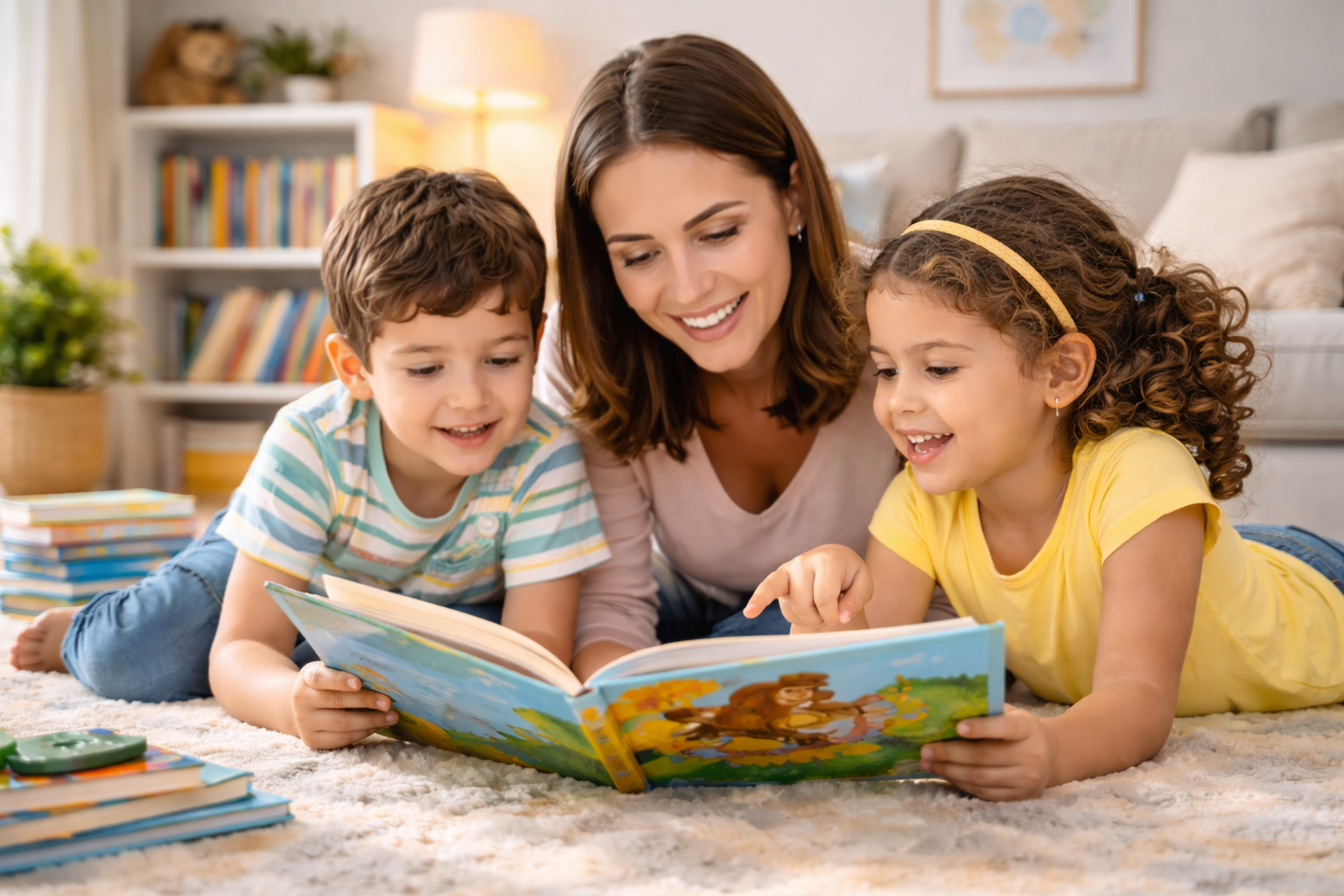
In a world filled with screens, fast entertainment, and constant distractions, nurturing a love for reading in children has never been more important. Reading is not just about learning words — it shapes imagination, strengthens cognitive development, improves emotional intelligence, and builds lifelong learning habits.
The earlier a child develops a positive relationship with books, the more natural reading becomes. The goal is not to pressure children into reading early, but to create an environment where books feel exciting, comforting, and meaningful.
Let’s explore practical and effective ways to motivate a love for reading from an early age.
Why Early Reading Habits Matter
When children are exposed to books early in life, they develop:
- Stronger vocabulary
- Better concentration skills
- Enhanced imagination
- Improved communication abilities
- Greater academic readiness
Reading also strengthens the emotional bond between parent and child. A simple bedtime story can become a daily ritual of connection.
More than anything, reading teaches children to think, question, and explore beyond their immediate environment.
Start Before They Can Read
You don’t have to wait until your child can recognize letters to introduce books.
Even babies benefit from:
- Looking at high-contrast images
- Listening to your voice
- Touching textured pages
- Watching facial expressions while you read
Reading aloud stimulates language development long before children understand the words.
The rhythm, tone, and repetition help build neural pathways related to communication.
Make Reading a Daily Ritual
Consistency builds habits.
Set aside a specific time each day for reading, such as:
- Before bedtime
- After lunch
- During quiet time
- Right after school
When reading becomes part of the daily routine, children begin to expect and look forward to it.
Even 10 to 15 minutes daily can make a meaningful difference over time.
Create a Reading-Friendly Environment
Children are more likely to read when books are accessible.
You can:
- Keep books within reach
- Create a cozy reading corner
- Rotate books occasionally to maintain interest
- Display books attractively
A comfortable space with pillows, soft lighting, and a small shelf can make reading feel special.
Accessibility encourages independence.
Let Your Child Choose
Allowing children to choose their own books increases motivation.
Even if the book seems simple, repetitive, or not your favorite, the key is ownership.
When children feel control over their reading choices, they are more engaged.
Follow their interests:
- Animals
- Space
- Dinosaurs
- Princesses
- Vehicles
- Nature
- Sports
Interest drives attention. Attention drives learning.
Make Reading Interactive
Reading should not feel passive.
While reading, you can:
- Ask questions (“What do you think will happen next?”)
- Point to pictures
- Change your voice for characters
- Encourage your child to turn pages
- Let them retell the story
Interactive reading strengthens comprehension and memory.
It also transforms reading into a shared experience rather than a task.
Be a Reading Role Model
Children imitate what they see.
If they observe you reading books, magazines, or even newspapers regularly, they understand that reading is valuable.
Talk about what you’re reading.
Say things like:
- “This book is really interesting.”
- “I learned something new today.”
Modeling creates powerful influence without pressure.
Limit Distractions
Excessive screen time can compete with reading habits.
This does not mean eliminating technology completely. Instead:
- Set reasonable screen limits
- Prioritize reading before digital entertainment
- Keep books available during quiet moments
Balance encourages healthier habits.
Reading requires focus — a skill that grows with practice.
Use Storytelling Beyond Books
Reading is not the only way to build narrative skills.
Encourage:
- Storytelling during car rides
- Creating stories together
- Acting out scenes
- Making up bedtime stories
When children create stories, they develop imagination and narrative structure.
Storytelling strengthens literacy foundations naturally.
Visit Libraries and Bookstores
Regular visits to libraries or bookstores make reading feel exciting.
Allow children to explore shelves and discover new topics.
Libraries often offer:
- Storytime sessions
- Reading challenges
- Interactive activities
These experiences associate reading with fun and community.
When books become part of positive memories, motivation increases.
Praise Effort, Not Speed
Avoid focusing on how fast or how perfectly your child reads.
Instead, celebrate:
- Effort
- Curiosity
- Persistence
- Improvement
Statements like:
- “I love how focused you were.”
- “You’re improving every day.”
- “You didn’t give up on that word.”
build confidence.
Confidence fuels motivation.
Respect Developmental Pace
Every child learns to read at a different speed.
Comparisons can create anxiety or resistance.
If your child is not reading independently yet, continue reading aloud.
If they struggle with certain words, support gently without pressure.
The goal is long-term love for reading — not early performance.
Connect Books to Real Life
Help children see the connection between stories and their world.
If you read about animals, visit a zoo.
If you read about cooking, prepare a simple recipe together.
When stories extend into real experiences, reading becomes meaningful.
Children understand that books are not separate from life — they enrich it.
Make Reading Fun, Not Forced
If reading feels like punishment, motivation disappears.
Avoid using reading as a consequence.
Instead, keep the experience relaxed and positive.
Some days will feel easier than others. That’s normal.
The key is maintaining warmth and encouragement.
The Long-Term Impact of Early Reading Habits
Children who develop a love for reading early often:
- Perform better academically
- Communicate more effectively
- Show stronger empathy
- Demonstrate creative thinking
- Develop independent learning skills
Reading is not just about school success — it shapes how children understand themselves and the world around them.
Planting the Seeds of Lifelong Learning
Encouraging a love for reading is not about strict schedules or complex strategies. It is about presence, consistency, and enthusiasm.
Read with joy.
Create routines.
Celebrate curiosity.
Follow their interests.
Model the behavior you want to see.
When books become associated with comfort, imagination, and connection, children carry that love into adolescence and adulthood.
The greatest gift you can give your child is not just the ability to read — it is the desire to keep reading.