
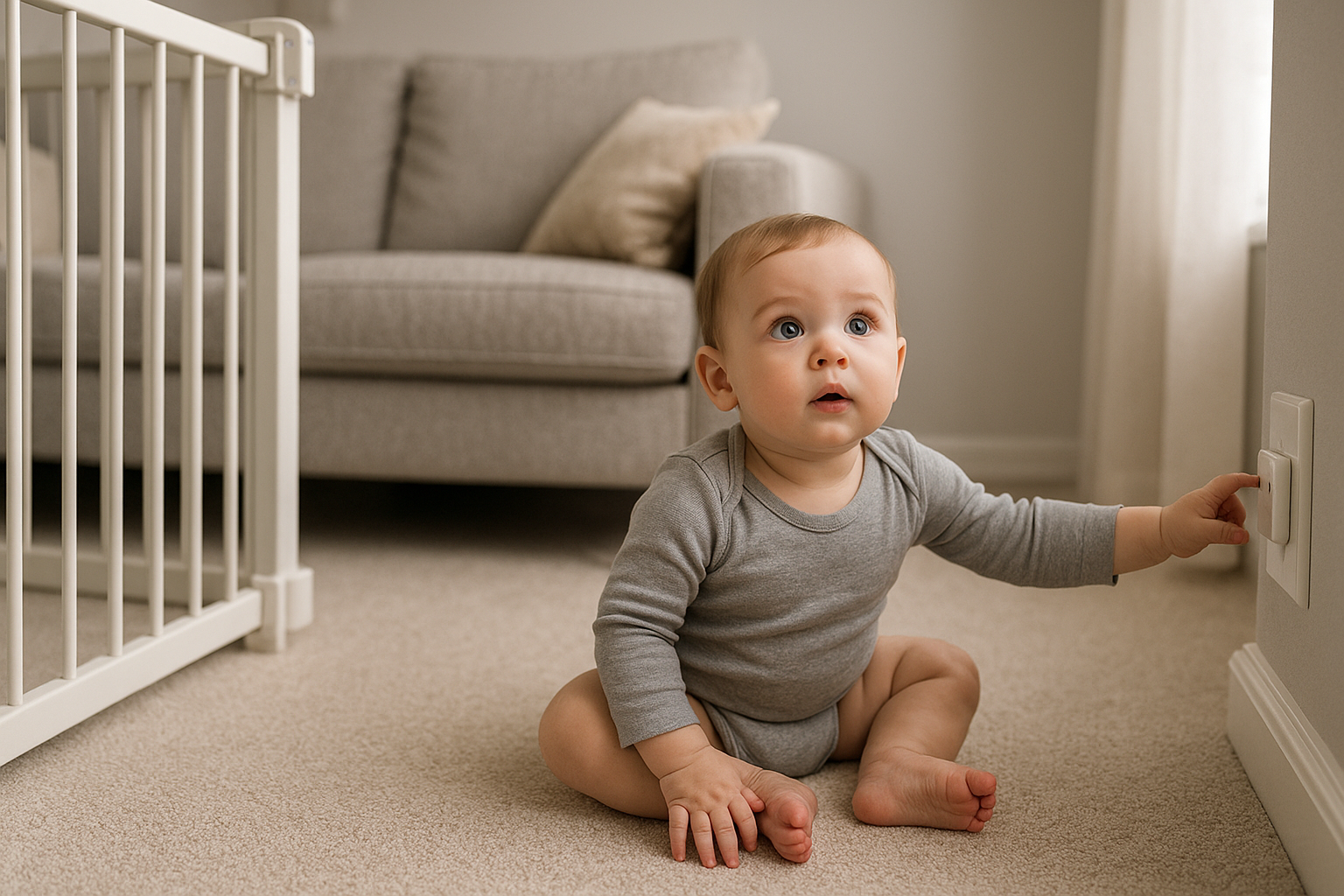
Bringing a baby into your home is a beautiful milestone — but it also means making sure every space is as safe as it is cozy. Babies grow fast, and before you know it, they’ll be rolling, crawling, and exploring everything within reach.
Creating a safe home environment isn’t about fear — it’s about prevention, preparation, and peace of mind. In this guide, you’ll learn how to make your home a secure space for your baby from day one.
Why Baby-Proofing Starts Early
Many parents wait until their baby starts crawling to begin safety preparations. But in reality, it’s better to start before the baby arrives.
Early preparation helps:
- Reduce last-minute stress
- Get used to new home arrangements
- Protect your baby from day one
- Prevent common accidents (falls, burns, choking, etc.)
Safety is an ongoing process, so think of baby-proofing as a mindset, not a one-time checklist.
Room-by-Room Baby Safety Checklist
Let’s break down how to make each room in your home baby-safe.
Living Room
- Cover electrical outlets with outlet covers or safety plugs
- Mount heavy furniture and TVs to the wall to prevent tipping
- Keep cords out of reach (blinds, chargers, or lamp cords)
- Use corner protectors on coffee tables or sharp furniture
- Keep floors clean and clutter-free to prevent choking hazards
Kitchen
- Install safety latches on drawers and cabinets
- Keep cleaning supplies and chemicals locked away
- Store sharp objects (knives, scissors) out of reach
- Avoid tablecloths that babies can pull down
- Turn pot handles inward when cooking to prevent tipping
Even if your baby can’t crawl yet, they will soon — and their reach might surprise you.
Bathroom
- Use a toilet lid lock
- Install non-slip mats inside and outside the tub
- Keep razors, medicine, and toiletries locked away
- Never leave your baby alone in the bath — ever
- Adjust the water heater to a safe maximum temperature (around 37–38°C / 98–100°F)
Nursery
- Use a crib that meets modern safety standards
- Keep the crib free of pillows, bumpers, and stuffed animals
- Install a baby monitor if you plan to leave them unattended
- Secure furniture like dressers to prevent tipping
- Avoid hanging cords or mobiles within baby’s reach
Make sure you follow safe sleep guidelines, including placing babies on their backs to sleep.
Bedroom (If Co-Sleeping)
If you’re co-sleeping or room-sharing:
- Use a firm mattress with no gaps between the bed and the wall
- Avoid heavy blankets, pillows, or loose sheets
- Never let the baby sleep on a couch or armchair
- Ensure parents are not under the influence of medication, alcohol, or sleep aids
Safe co-sleeping requires intentional setup — not improvisation.
Additional Safety Tips for the Whole Home
Beyond individual rooms, there are general safety upgrades every parent should consider.
Gates and Barriers
- Use baby gates at the top and bottom of stairs
- Create safe play zones using playpens or foam mats
Choking Hazards
- Avoid small toys or objects that fit through a toilet paper roll
- Always check the floor for dropped items (coins, beads, batteries)
Fire and Carbon Monoxide Safety
- Install smoke and CO detectors
- Check batteries every month
- Keep a fire extinguisher in the kitchen
Pet Considerations
- Supervise interactions between pets and baby
- Keep litter boxes, pet food, and toys out of reach
- Slowly introduce your pet to baby sounds and smells
Safety While You’re Not Watching
You can’t be in the room every second. That’s why preventive safety is so important.
Try these strategies:
- Set up safe play areas where baby can explore freely
- Use visual cues (like red tape) for off-limits areas
- Use smart baby monitors to keep eyes and ears on your child when apart
Safe Doesn’t Mean Sterile
Some parents worry that making everything “baby-safe” means losing the warmth or beauty of their home.
Not true. You can:
- Choose stylish but functional storage solutions
- Use rugs, curtains, and colors that reflect your personality
- Incorporate minimalist baby-proofing tools that blend with décor
The goal isn’t to create a bubble — it’s to minimize risk so your baby can explore confidently.
Common Myths About Baby Safety
Let’s clear up a few common misconceptions:
- “My baby isn’t mobile yet, so I don’t need to baby-proof.”
Babies can roll or wiggle off surfaces as early as 2 months. - “If I’m always watching, I don’t need safety tools.”
Accidents happen in seconds — baby-proofing gives you a backup layer. - “I’ll just keep saying ‘no’ and teach them not to touch.”
Babies learn through touching — safety is about prevention, not restriction.
Keep It Updated
As your child grows, so do the risks. Every few months, re-evaluate:
- What your baby can now reach, grab, or climb
- Whether furniture needs rearranging
- Which objects need to be moved to higher shelves
Stay one step ahead of your baby’s development to avoid surprise hazards.
Peace of Mind Starts at Home
A baby-safe home doesn’t mean eliminating every risk — it means creating a space where your child can grow, learn, and explore with confidence and security.
With smart planning, room-by-room adjustments, and regular updates, you’ll set the foundation for a home that’s as safe as it is full of love.