
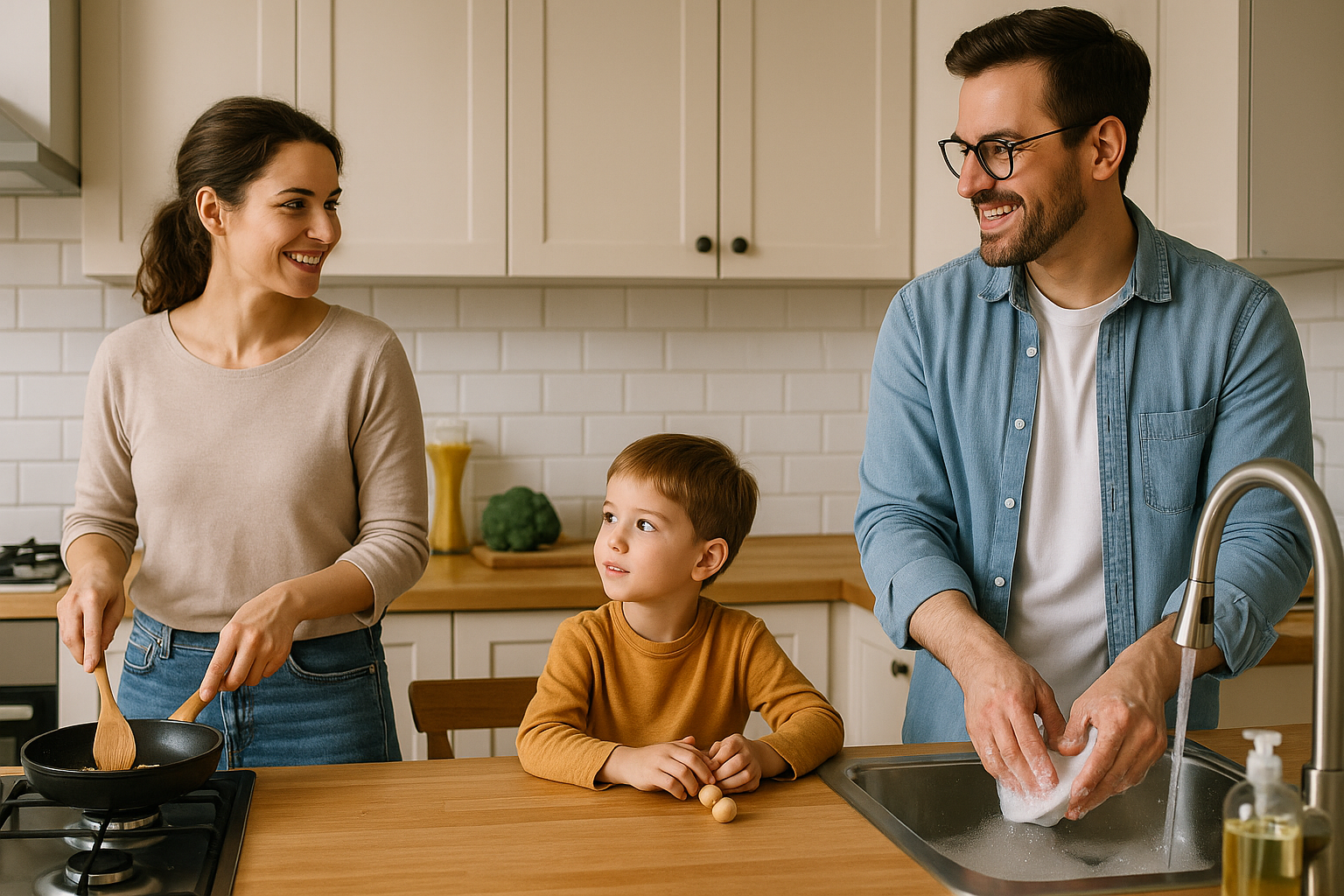
Children are always watching. Even when you think they’re not listening, they are absorbing the way you speak, handle emotions, solve problems, and interact with the world. As a parent, your words matter — but your actions matter even more.
The way you live your life becomes your child’s first and most powerful classroom. Teaching by example isn’t about being perfect — it’s about being intentional, authentic, and aware of the influence you carry every day.
Why Parental Example Matters More Than You Think
Children learn through imitation. From their earliest days, they copy the behaviors they see. This is how they develop:
- Language
- Emotional regulation
- Social skills
- Problem-solving habits
- Moral and ethical values
You might tell your child to “be kind” — but if they see you speak rudely to others, the message becomes confusing. On the other hand, watching you treat others with respect, manage stress calmly, and admit when you’re wrong sends powerful messages that last a lifetime.
You Are Your Child’s First Role Model
Before teachers, friends, or celebrities influence your child, it’s you they look up to. Your daily choices — how you treat your partner, handle frustration, respond to challenges — shape their understanding of what’s “normal.”
Ask yourself:
- Am I living the values I want to teach?
- How do I handle mistakes or failure in front of my child?
- What message do I send about kindness, honesty, or responsibility?
Being a role model doesn’t mean being perfect — it means being real and growing in front of them.
Modeling Emotional Intelligence
Children don’t just need discipline — they need emotional coaching. How you express and manage emotions teaches your child what is (and isn’t) acceptable.
Ways to model emotional intelligence:
- Name your feelings: “I’m feeling frustrated right now, so I’m going to take a deep breath.”
- Apologize when needed: “I’m sorry I snapped earlier. That wasn’t fair to you.”
- Show healthy coping: “I had a hard day, so I’m going to go for a walk to relax.”
When children see adults handling emotions constructively, they learn to do the same.
Teaching Respect Through Action
Respect is not just taught through rules — it’s demonstrated in everyday interactions. Children notice how you treat:
- Service workers
- Family members
- Strangers
- Pets
- Yourself
Speaking politely, using kind language, listening without interrupting, and showing empathy toward others lays the foundation for respectful children.
Tip: How you speak about others when they’re not around also sends a strong message.
Demonstrating Healthy Relationships
Your child watches how you interact with your partner, relatives, and friends. They learn:
- How conflicts are resolved
- How affection is expressed
- How teamwork looks in real life
If they see shouting, sarcasm, or emotional distance, they may internalize that as normal. If they see kindness, patience, and open communication, that becomes their template for future relationships.
Even single parents have many opportunities to model positive relationships — through friendships, family dynamics, and self-respect.
Modeling Responsibility and Accountability
Children thrive with structure and responsibility. But the best way to teach that isn’t through lectures — it’s through example.
Show them what it looks like to:
- Keep promises
- Admit mistakes
- Follow through on tasks
- Clean up after yourself
- Apologize without excuses
For example, if you accidentally forget something important, say, “That was my mistake. I’m going to fix it.” This teaches humility, problem-solving, and ownership — more powerfully than any punishment ever could.
Setting an Example of Self-Care
Many parents neglect themselves in the name of caring for their families. But this can send a dangerous message: that sacrifice means ignoring your own needs.
Instead, show your child that taking care of yourself — mentally, emotionally, and physically — is a good and necessary part of life.
- Eat nourishing meals
- Get rest when you’re tired
- Say no when your plate is full
- Do things that bring you joy
This not only keeps you healthier, but also teaches your child the importance of balance and self-respect.
Modeling How to Learn from Failure
Children will make mistakes — and they will watch how you handle yours.
Instead of hiding your failures, use them as teaching moments:
- “I tried something today and it didn’t work out. But I’m going to try again tomorrow.”
- “I was nervous, but I still gave it a shot.”
This helps them develop resilience and a growth mindset — understanding that it’s okay to stumble, as long as you keep learning.
Practicing Integrity in the Everyday
Integrity isn’t something you teach in a lecture — it’s in the little choices you make each day.
- Do you return the extra change when a cashier makes a mistake?
- Do you tell white lies in front of your child?
- Do you keep your word, even when it’s inconvenient?
These small actions add up. Over time, they shape your child’s internal compass far more than rules or punishments ever could.
Being Honest About Your Imperfections
Sometimes, the best example is showing that you’re a work in progress too. Instead of pretending to always have it together, let your child see you growing, struggling, and getting better.
Say things like:
- “I used to be afraid of speaking up too — now I’m practicing it.”
- “I’m working on being more patient — it’s hard sometimes.”
This vulnerability builds trust and shows your child that personal growth is a lifelong journey.
Your Actions Are Your Legacy
Children may forget the exact words you said — but they will remember how you made them feel, how you lived, and how you treated others. You are their most consistent example of how to be human in the world.
So be kind. Be real. Be willing to grow. Not for perfection — but for connection.
Each day brings a new opportunity to lead by example — and shape a child not just through words, but through the life you live alongside them.