
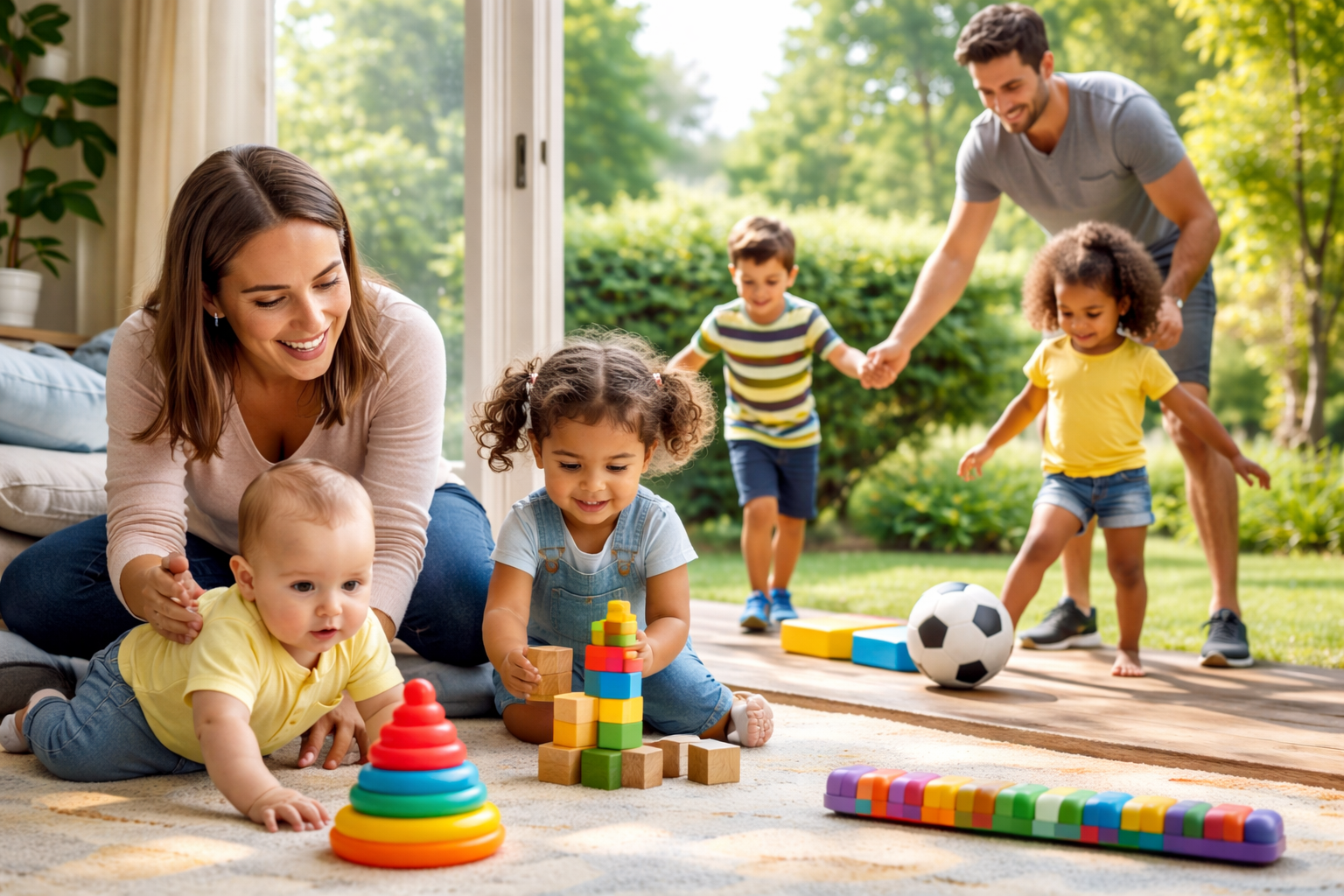
Watching your child grow is one of the most rewarding experiences of parenthood. From the first time they lift their head to the moment they confidently ride a bike, every milestone reflects important stages of development. Among these milestones, motor skills play a fundamental role.
Motor development is not just about movement. It directly impacts confidence, independence, learning, and even social interaction. Understanding how to encourage motor skills at different ages allows you to support your child in a natural, healthy, and pressure-free way.
Let’s explore how you can nurture both fine and gross motor skills from infancy through the school years.
Understanding Motor Skills
Motor skills are divided into two main categories: fine motor skills and gross motor skills. Both are essential and develop progressively over time.
Fine Motor Skills
Fine motor skills involve small, precise movements that use the hands, fingers, and wrists. These skills are necessary for:
- Grasping toys
- Buttoning clothes
- Drawing and writing
- Using utensils
- Turning pages in a book
Strong fine motor skills help children become more independent in daily tasks and prepare them for academic activities like writing.
Gross Motor Skills
Gross motor skills involve larger muscle groups and whole-body movement. These include:
- Rolling over
- Crawling
- Walking
- Running
- Jumping
- Climbing
Gross motor development supports coordination, balance, posture, and physical confidence.
Both types of skills are interconnected. When a child feels physically capable, they are more willing to explore their environment and learn new things.
Encouraging Motor Development in Infants (0–12 Months)
During the first year of life, development happens rapidly. Babies move from limited control to sitting, crawling, and possibly even standing.
Tummy Time Is Essential
Tummy time strengthens neck, shoulder, and core muscles. Start with short sessions several times a day while your baby is awake and supervised. Gradually increase the duration as they become more comfortable.
Encourage Reaching and Grasping
Place toys slightly out of reach to motivate movement. Soft rattles, textured toys, and safe objects stimulate both fine and gross motor coordination.
Promote Safe Exploration
Allow your baby to move freely on a safe floor mat rather than spending long periods in swings or seats. Floor time encourages rolling, pivoting, and crawling.
At this stage, patience is key. Every baby develops at their own pace.
Supporting Toddlers (1–3 Years)
Toddlers are naturally active and curious. This is the perfect time to build strength and coordination through play.
Encourage Walking, Climbing, and Balancing
Provide safe opportunities for:
- Walking on different surfaces
- Climbing low playground structures
- Pushing and pulling toys
- Kicking and throwing soft balls
These activities strengthen large muscle groups and improve balance.
Develop Fine Motor Precision
Offer activities such as:
- Stacking blocks
- Sorting shapes
- Scribbling with crayons
- Turning knobs or opening containers
Simple daily tasks like feeding themselves with a spoon also build coordination.
Avoid Over-Assistance
It may be tempting to help quickly, but allowing toddlers to try independently builds both motor skills and confidence.
Boosting Skills in Preschoolers (3–5 Years)
Preschoolers refine coordination and gain better control over their movements.
Improve Balance and Agility
Encourage:
- Hopping on one foot
- Skipping
- Simple obstacle courses
- Catching and throwing balls
These activities strengthen body awareness and coordination.
Strengthen Hand Control
At this stage, children can begin:
- Cutting with child-safe scissors
- Drawing shapes
- Stringing beads
- Building more complex block structures
Arts and crafts are excellent tools for improving hand strength and precision.
Make Movement Fun
Children learn best through play. Dancing, imaginative games, and outdoor adventures naturally support motor growth.
Supporting School-Age Children (6–12 Years)
Motor skills continue to develop through middle childhood, becoming more refined and specialized.
Encourage Sports and Physical Activities
Team sports, swimming, martial arts, gymnastics, or cycling all enhance coordination, endurance, and strength.
Allow your child to choose activities they enjoy. Enjoyment increases consistency and long-term development.
Refine Fine Motor Skills
School-age children benefit from:
- Drawing and painting
- Playing musical instruments
- Craft projects
- Building models
- Writing practice
These activities improve hand-eye coordination and dexterity.
Promote Physical Confidence
Celebrate effort rather than performance. Avoid comparing your child to others. Confidence plays a major role in willingness to try new physical challenges.
Fun Everyday Activities That Build Motor Skills
You don’t need expensive equipment or structured programs. Many everyday activities promote development.
Outdoor Play
Running, jumping, playing tag, and climbing strengthen large muscle groups and improve coordination.
Sensory Play
Playing with sand, water, clay, or dough enhances tactile awareness and fine motor control.
Household Tasks
Age-appropriate chores such as:
- Carrying light groceries
- Folding towels
- Watering plants
- Setting the table
help build strength, coordination, and responsibility.
Creative Play
Painting, building with blocks, assembling puzzles, and crafting encourage precision and patience.
Consistency matters more than intensity.
Signs to Watch (Without Panic)
Every child develops differently, but you may want to seek professional guidance if your child:
- Avoids movement consistently
- Shows extreme difficulty with coordination
- Struggles significantly with tasks typical for their age
- Experiences noticeable muscle stiffness or weakness
Early support can make a significant difference. However, small variations in development are normal.
Creating a Supportive Environment
A supportive environment encourages natural growth.
Provide Space to Move
Children need room to explore safely. Limiting screen time and encouraging active play supports overall development.
Offer Encouragement
Use positive reinforcement. Statements like “You’re getting stronger!” or “You worked hard on that!” motivate children to continue trying.
Model an Active Lifestyle
Children learn by observing. When parents value physical activity, children are more likely to follow.
Avoid Pressure
Pushing children too hard can create frustration. Growth should feel joyful, not stressful.
The Long-Term Benefits of Strong Motor Skills
Motor development affects more than physical health. It contributes to:
- Academic readiness
- Emotional regulation
- Social participation
- Self-esteem
- Independence
When children feel capable in their bodies, they approach the world with greater confidence.
Building Strong Foundations for Life
Encouraging motor skills development does not require perfection. It requires awareness, patience, and consistent opportunities for movement.
By providing age-appropriate activities, celebrating progress, and creating a safe environment for exploration, you give your child tools that extend far beyond childhood.
Small daily actions—playing, exploring, building, running—create powerful long-term results.
Your support today shapes your child’s confidence tomorrow.