
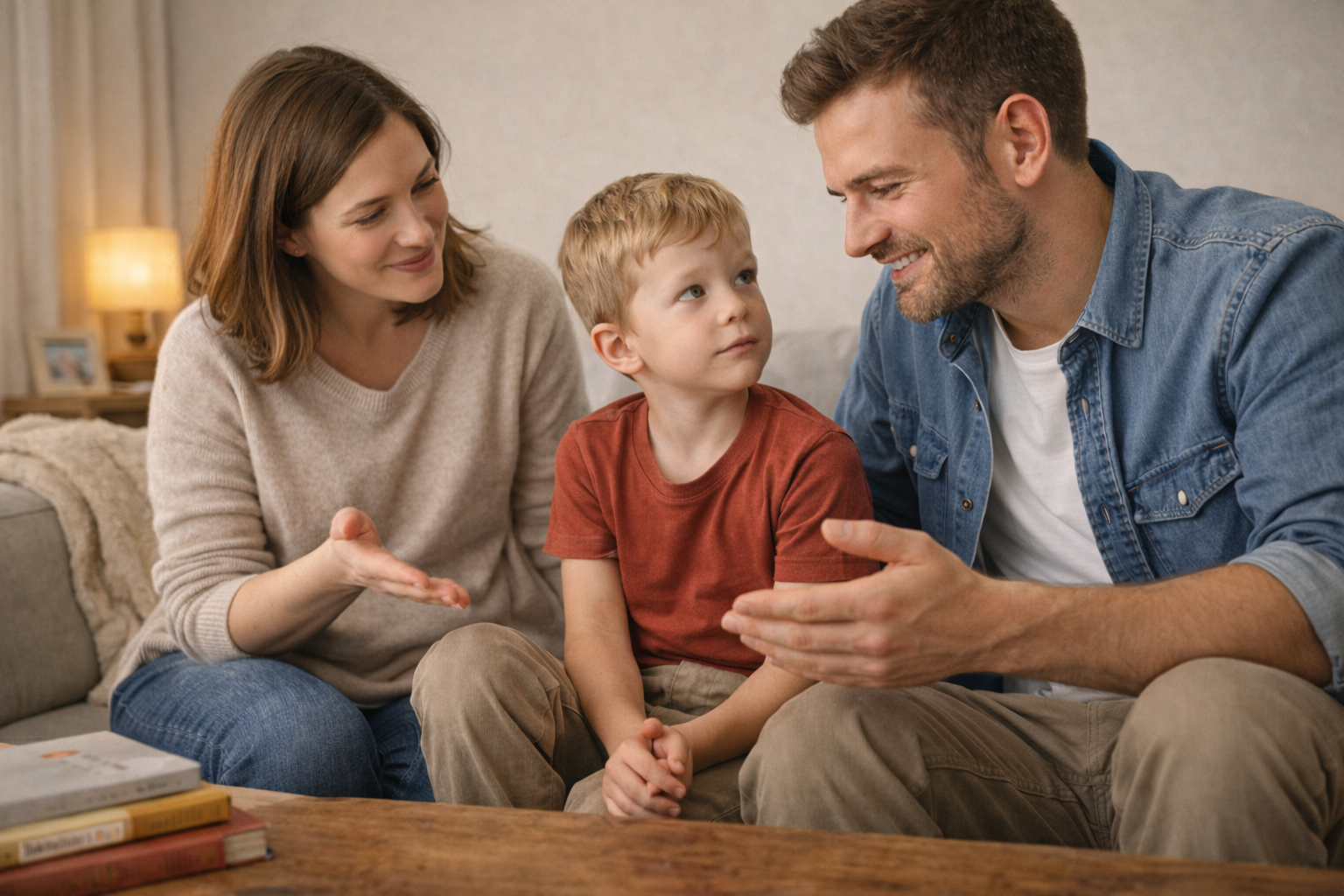
Dialogue is one of the most powerful tools in raising and educating children. More than giving instructions or correcting behavior, dialogue builds understanding, trust, and emotional connection. Through open and respectful communication, children learn how to express themselves, listen to others, and navigate relationships in healthy ways.
When dialogue is present in daily family life, education becomes a shared process rather than a one-sided exchange. Children feel valued, heard, and guided instead of controlled.
Understanding Dialogue Beyond Simple Conversation
Dialogue is more than talking; it is a two-way exchange based on respect and attention. It involves listening with interest, responding with empathy, and allowing space for children to express their thoughts and emotions.
In education, dialogue helps parents understand what children are feeling and thinking. This understanding allows guidance to be more effective and aligned with a child’s emotional needs.
Why Dialogue Is Essential in Raising Children
Children who grow up in environments where dialogue is encouraged tend to develop stronger emotional intelligence. They learn that their opinions matter and that communication is a safe way to resolve doubts and conflicts.
Dialogue also strengthens the parent-child bond. When children feel heard, they are more likely to trust their parents and seek guidance during difficult moments.
Building Emotional Safety Through Conversation
Emotional safety is created when children know they can speak without fear of judgment or punishment. Dialogue fosters this safety by showing children that emotions and questions are welcome.
When parents respond calmly and respectfully, children feel secure sharing concerns. This openness supports emotional development and self-confidence.
Teaching Values Through Dialogue
Values such as respect, honesty, and responsibility are better taught through conversation than through rules alone. Dialogue allows parents to explain reasons behind expectations and decisions.
Through discussion, children learn to reflect on their actions and understand consequences. This approach encourages internal motivation rather than obedience based solely on authority.
Encouraging Children to Express Their Feelings
Children experience emotions intensely, especially in early stages of development. Dialogue helps them put words to their feelings and understand what they are experiencing.
When parents acknowledge emotions instead of dismissing them, children learn emotional awareness. This skill supports better self-regulation and healthier relationships later in life.
Listening as an Educational Tool
Listening is a central part of dialogue. When parents listen attentively, children feel respected and validated.
Active listening involves eye contact, patience, and genuine interest. This practice teaches children the importance of listening to others and modeling respectful communication.
Dialogue as a Tool for Conflict Resolution
Conflicts are a natural part of family life. Dialogue transforms conflicts into learning opportunities rather than power struggles.
By discussing disagreements calmly, parents teach children how to express opinions, negotiate, and find solutions. These skills are essential for social development.
Setting Limits Through Conversation
Dialogue does not eliminate boundaries. Instead, it makes limits clearer and more meaningful. When parents explain rules through conversation, children are more likely to understand and respect them.
Clear and calm explanations help children see limits as guidance rather than punishment. This approach reduces resistance and promotes cooperation.
Adapting Dialogue to Different Ages
The way dialogue happens should evolve as children grow. Younger children benefit from simple language and concrete examples, while older children appreciate deeper conversations and shared decision-making.
Adapting communication style shows respect for a child’s developmental stage and strengthens mutual understanding.
Encouraging Critical Thinking
Dialogue invites children to think, question, and reflect. Asking open-ended questions encourages curiosity and independent thinking.
Instead of giving immediate answers, parents can guide children to explore ideas. This method builds problem-solving skills and confidence in their own reasoning.
Modeling Respectful Communication
Children learn how to communicate by observing adults. When parents use respectful dialogue, children naturally adopt similar behaviors.
Tone of voice, patience, and emotional control all serve as examples. Modeling healthy communication is one of the most effective educational tools.
Creating Daily Opportunities for Dialogue
Dialogue does not need to be formal or planned. Everyday moments such as meals, walks, or bedtime are ideal opportunities for conversation.
Consistent small conversations build a strong habit of communication. Over time, dialogue becomes a natural part of family life.
Dialogue as a Foundation for Lifelong Learning
Education extends far beyond school. Dialogue encourages curiosity, reflection, and emotional growth that last a lifetime.
Children raised in environments rich in dialogue are more prepared to communicate effectively, build relationships, and face challenges with confidence.
Strengthening Family Bonds Through Dialogue
Dialogue creates connection. It transforms daily interactions into meaningful exchanges and strengthens emotional bonds.
By prioritizing open communication, parents build a home environment based on trust, understanding, and mutual respect.
Dialogue as a Key Element in Healthy Education
The role of dialogue in children’s education is fundamental. It supports emotional development, strengthens relationships, and teaches essential life skills.
When parents embrace dialogue, education becomes a shared journey. Through listening, speaking, and understanding, families grow together in a healthy and balanced way.